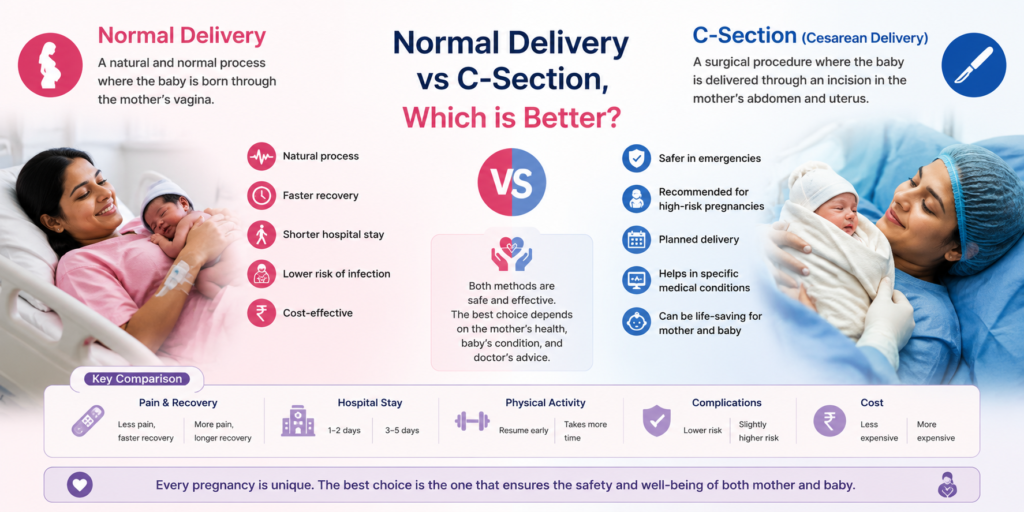
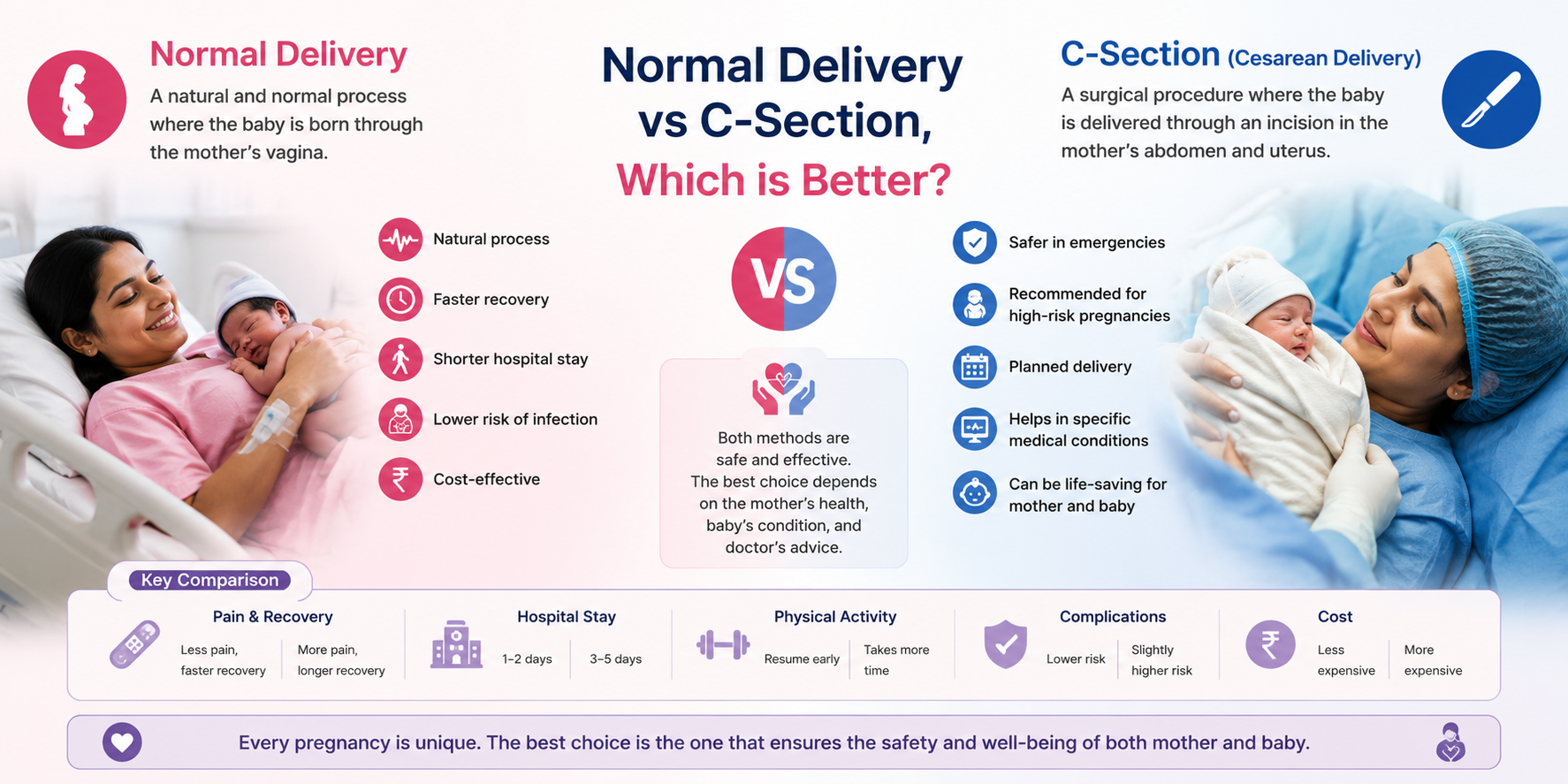
Normal Delivery vs C-Section is one of the most common questions expecting parents ask during pregnancy. Both delivery methods are safe when performed under the right circumstances. The best option depends on the mother’s health, the baby’s condition, and any pregnancy-related complications. Your obstetrician will recommend the safest approach for both mother and baby.
What Is Normal Delivery?
Normal delivery, also known as vaginal birth, is the natural process of childbirth in which the baby is born through the birth canal without major surgery. It is the preferred option for most healthy pregnancies because it generally involves fewer complications and a quicker recovery.
Key features of normal delivery:
- Baby is delivered through the birth canal.
- Labor occurs naturally or may be medically induced if needed.
- No major abdominal surgery is involved.
- Recovery is generally faster than a C-section.
- Most mothers can resume daily activities sooner.
What Is a C-Section Delivery?
A Cesarean section (C-section) is a surgical procedure in which the baby is delivered through an incision made in the mother’s abdomen and uterus. It is performed when a vaginal delivery may pose risks to the mother or baby.
Key features of a C-section:
- Performed under spinal, epidural, or general anesthesia.
- Involves surgical incisions in the abdomen and uterus.
- Recommended for specific medical conditions or emergencies.
- Requires a longer hospital stay and recovery period.
- Can be planned (elective) or performed as an emergency procedure.
Normal Delivery vs C-Section: Key Differences
Both normal delivery and C-section delivery are safe methods of childbirth, but they differ in terms of the delivery process, recovery time, risks, and medical indications. Understanding these differences can help expectant parents make informed decisions with their doctor’s guidance.
| Feature | Normal Delivery | C-Section Delivery |
| Delivery Method | Baby is born through the birth canal | Baby is delivered through a surgical incision in the abdomen and uterus |
| Procedure Type | Natural vaginal birth | Major abdominal surgery |
| Hospital Stay | Usually 24–48 hours | Usually 2–4 days |
| Recovery Time | Around 2–6 weeks | Around 6–8 weeks |
| Pain | Intense during labor, but relief is immediate after birth | No pain during surgery due to anesthesia, but post-operative pain during recovery |
| Risk of Infection | Lower | Higher because it involves surgery |
| Blood Loss | Usually less | Generally higher than vaginal delivery |
| Anesthesia | Usually not required (except epidural if chosen) | Spinal, epidural, or general anesthesia is required |
| Benefits for Baby | Helps clear lung fluid and exposes the baby to beneficial bacteria | Does not provide the same birth canal benefits but is safer in complicated pregnancies |
| Future Pregnancies | Lower risk of pregnancy-related surgical complications | Slightly higher risk of placenta-related problems and repeat C-sections |
| Best Suited For | Healthy, low-risk pregnancies | High-risk pregnancies or when vaginal birth is unsafe |
Benefits of Normal Delivery
For most healthy pregnancies, normal delivery is the preferred method of childbirth because it offers several health benefits for both the mother and the baby. It also allows for a quicker recovery and fewer complications compared to major surgery.
- Faster Recovery: Most mothers recover more quickly and can resume daily activities sooner.
- Shorter Hospital Stay: Typically requires only 24–48 hours of hospitalization.
- Lower Risk of Surgical Complications: Avoids risks associated with major surgery, such as infections, excessive bleeding, and anesthesia-related complications.
- Early Mother-Baby Bonding: Mothers can usually hold and breastfeed their baby immediately after birth.
- Supports Baby’s Lung Health: Passing through the birth canal helps remove fluid from the baby’s lungs, improving breathing after birth.
- Boosts Baby’s Immunity: Exposure to beneficial bacteria during vaginal birth helps strengthen the newborn’s immune system.
- Lower Risk in Future Pregnancies: Reduces the likelihood of complications related to uterine scars or repeat surgeries.
Book an Appointment for Safe and Personalized Pregnancy Care
Benefits of a C-Section
A C-section (Cesarean delivery) is a safe and often life-saving procedure when a vaginal birth is not possible or may put the mother or baby at risk. In certain medical situations, it provides the safest way to deliver the baby.
- Protects Mother and Baby During Complications: Reduces risks when pregnancy or labor becomes complicated.
- Life-Saving in Emergencies: Can quickly deliver the baby during fetal distress, severe bleeding, or other obstetric emergencies.
- Safe for Breech or Abnormal Baby Position: Recommended when the baby is not in the head-down position.
- Helpful in Prolonged or Difficult Labor: Prevents complications if labor fails to progress.
- Reduces Risk of Birth Injuries: May lower the chance of certain birth-related injuries in difficult deliveries.
- Beneficial for Certain Medical Conditions: Recommended for conditions such as placenta previa, some multiple pregnancies, or previous uterine surgeries.
- Can Be Planned in Advance: An elective C-section allows families and healthcare providers to prepare for the delivery date when medically appropriate.
- Avoids Emergency Vaginal Delivery Risks: Provides a controlled surgical environment when vaginal delivery is considered unsafe.
- May Prevent Severe Perineal Tears: Eliminates the risk of vaginal and perineal tears that can occur during normal delivery.
When Is a C-Section Necessary?
A C-section (Cesarean delivery) is performed when a vaginal birth could pose risks to the mother, the baby, or both. It may be planned in advance for known medical conditions or carried out as an emergency if complications develop during labor.
- Breech Presentation: The baby is positioned feet-first or bottom-first instead of head-first.
- Transverse Lie: The baby is lying sideways in the uterus.
- Fetal Distress: The baby shows signs of reduced oxygen supply or an abnormal heart rate.
- Failure of Labor to Progress: The cervix stops dilating or the baby does not move down the birth canal despite strong contractions.
- Placenta Previa: The placenta covers the cervix, blocking the baby’s passage.
- Placental Abruption: The placenta separates from the uterus before birth, causing heavy bleeding.
- Umbilical Cord Prolapse: The umbilical cord slips through the cervix before the baby, reducing oxygen supply.
- Multiple Pregnancy: Some twin or higher-order multiple pregnancies require a C-section, depending on the babies’ positions and health.
- Previous C-Section or Uterine Surgery: A repeat C-section may be recommended in certain cases to reduce the risk of uterine rupture.
- Large Baby (Fetal Macrosomia): A very large baby may make vaginal delivery difficult or unsafe.
- Maternal Medical Conditions: Severe preeclampsia, uncontrolled hypertension, certain heart conditions, or active genital herpes infection may require a surgical delivery.
- Cephalopelvic Disproportion (CPD): The baby’s head is too large to safely pass through the mother’s pelvis.
Schedule Your Consultation with Our Experienced Obstetricians Today. Click Here
Risks and Complications of Normal Delivery vs C-Section
Both normal delivery and C-section delivery are generally safe when performed under appropriate medical care. However, each method has its own potential risks and complications, which vary depending on the mother’s health, the baby’s condition, and the circumstances of childbirth.
| Normal Delivery Risks | C-Section Risks |
| Perineal tears or vaginal injuries | Surgical wound infection |
| Pelvic floor muscle weakness | Excessive bleeding during or after surgery |
| Temporary urinary incontinence | Blood clots (deep vein thrombosis) |
| Rare risk of emergency intervention during labor | Adverse reactions to anesthesia |
| Prolonged labor in some cases | Longer recovery and hospital stay |
| Risk of assisted delivery using forceps or vacuum | Injury to nearby organs such as the bladder (rare) |
| Temporary discomfort while healing | Scar tissue (adhesions) after surgery |
| Rare risk of postpartum hemorrhage | Increased risk of placenta previa or placenta accreta in future pregnancies |
| Mild pain during recovery from tears or episiotomy | Higher likelihood of repeat C-sections in future pregnancies |
| Possible pelvic organ prolapse later in life (in some women) | Delayed return to normal daily activities due to surgical healing |
How to Choose Between Normal Delivery and C-Section?
The choice between normal delivery and C-section should be based on your medical condition, your baby’s health, and your doctor’s recommendation. While normal delivery is generally preferred for low-risk pregnancies, a C-section may be the safest option if complications arise.
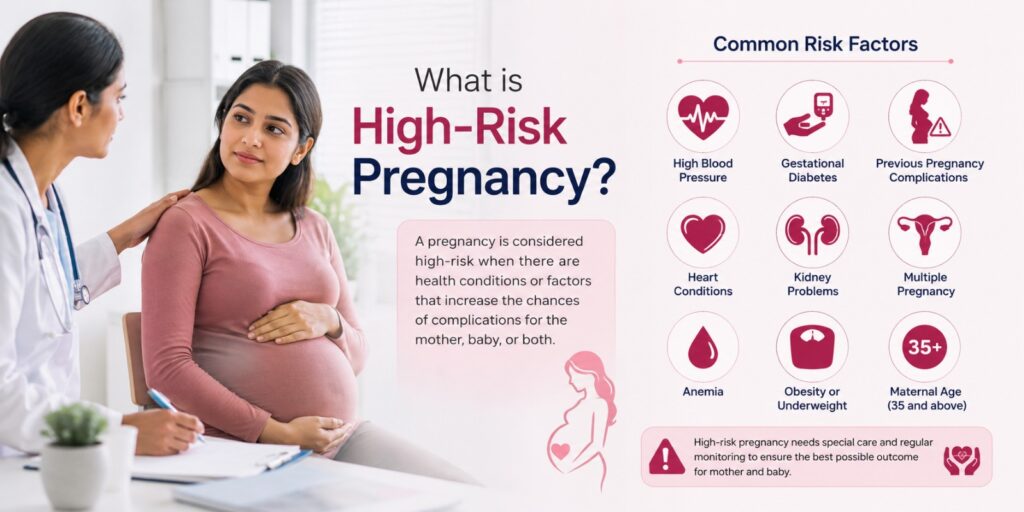
- Mother’s Overall Health: Existing medical conditions such as high blood pressure, diabetes, or heart disease may influence the delivery method.
- Baby’s Position: A head-down baby is usually suitable for normal delivery, while breech or transverse positions may require a C-section.
- Pregnancy Complications: Conditions like placenta previa, fetal distress, or preeclampsia often make a C-section the safer choice.
- Previous Pregnancy History: A previous C-section or uterine surgery may affect whether a vaginal birth is recommended.
- Progress of Labor: If labor progresses normally, vaginal delivery is usually possible. Failure of labor to progress may require a C-section.
- Baby’s Size: A very large baby (fetal macrosomia) may increase the need for a surgical delivery.
- Multiple Pregnancy: Twins or higher-order multiples may require a C-section depending on their position and health.
- Doctor’s Recommendation: Your obstetrician will assess all medical factors and recommend the safest option for both mother and baby.
- Emergency Situations: Labor conditions can change quickly, and an emergency C-section may become necessary even if a normal delivery was initially planned.
Normal Delivery vs C-Section: Which Is Better for Mother and Baby?
There is no single “better” delivery method for every pregnancy. Normal delivery is generally the preferred option for healthy, low-risk pregnancies because it offers faster recovery, fewer surgical risks, and natural health benefits for the baby. However, a C-section is the safest and often life-saving choice when medical complications make vaginal delivery unsafe.
| Factor | Normal Delivery | C-Section |
| Best For | Healthy, low-risk pregnancies | High-risk pregnancies or delivery complications |
| Mother’s Recovery | Faster recovery with a shorter hospital stay | Longer recovery due to major surgery |
| Surgical Risks | Lower risk of infection and bleeding | Higher risk because it is a surgical procedure |
| Pain | Intense during labor but subsides after birth | Minimal during surgery due to anesthesia, followed by post-operative pain |
| Benefits for Baby | Helps clear lung fluid and exposes the baby to beneficial bacteria | Safely delivers the baby when vaginal birth is unsafe |
| Future Pregnancies | Lower risk of surgery-related complications | Slightly higher risk of placenta-related problems and repeat C-sections |
Normal Delivery vs C-Section: Which is Better? FAQs
1. Which is better, normal delivery or C-section?
Neither is universally better. Normal delivery is generally preferred for healthy, low-risk pregnancies because it offers faster recovery and fewer surgical risks. A C-section is the safest option when medical complications make vaginal birth unsafe.
2. Is a normal delivery safer than a C-section?
For most uncomplicated pregnancies, normal delivery is considered safer as it avoids major surgery and has a shorter recovery time. However, a C-section is safer in high-risk situations.
3. When is a C-section recommended?
A C-section may be recommended for conditions such as breech presentation, fetal distress, placenta previa, prolonged labor, umbilical cord problems, multiple pregnancies, or certain maternal health conditions.
4. Does a C-section take longer to recover than a normal delivery?
Yes. Recovery after a normal delivery is usually quicker, while a C-section typically requires 6–8 weeks for complete healing because it is a major surgical procedure.
5. Which delivery method is better for the baby?
Both methods are safe when medically appropriate. Normal delivery helps clear fluid from the baby’s lungs and exposes the baby to beneficial bacteria, while a C-section is safer when complications threaten the baby’s health.
6. Can I choose a normal delivery after a previous C-section?
Some women may be eligible for a Vaginal Birth After Cesarean (VBAC), depending on factors such as the type of previous uterine incision, overall health, and pregnancy history. Your doctor will determine whether VBAC is a safe option.