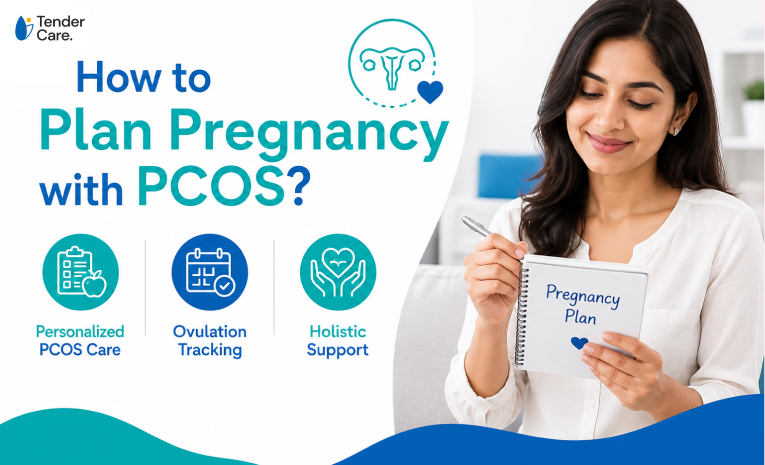
Planning a pregnancy with Polycystic Ovary Syndrome (PCOS) may require a little extra preparation because PCOS can affect ovulation, menstrual cycles, insulin sensitivity, and hormone levels. However, having PCOS does not mean you cannot become pregnant. Most women with PCOS can conceive and have healthy pregnancies with appropriate lifestyle changes, ovulation tracking, and medical guidance when needed.
If you are planning pregnancy with PCOS, the goal is to improve overall health, support regular ovulation, identify fertile days, and manage any underlying conditions before conception.
What Is PCOS?
Polycystic Ovary Syndrome (PCOS) is a common hormonal and metabolic condition that can affect ovulation, menstrual cycles and fertility. Women with PCOS may experience irregular periods, excess androgen levels, acne, unwanted facial or body hair, weight changes or difficulty with ovulation.
Can You Get Pregnant with PCOS?
Yes. Pregnancy with PCOS is possible, although some women may take longer to conceive because irregular or absent ovulation can make it difficult to identify fertile days.
PCOS is one of the common causes of ovulatory infertility, but fertility treatments and lifestyle modifications can help many women achieve pregnancy. The right approach depends on factors such as age, menstrual cycle pattern, weight, insulin resistance, other health conditions, and whether ovulation is occurring regularly.
If you have been trying to conceive without success, consulting a gynecologist or fertility specialist can help identify the cause and create an individualized treatment plan.
How to Plan Pregnancy with PCOS?
Planning pregnancy with PCOS involves improving overall health, supporting regular ovulation, tracking fertile days, taking appropriate prenatal supplements and seeking medical guidance when needed.
- Follow a balanced diet: Choose protein-rich, high-fiber foods and limit excess sugar and refined carbohydrates.
- Exercise regularly: Aim for 30–45 minutes of physical activity on most days.
- Maintain a healthy weight: If advised by your doctor, gradual weight management may support ovulation and metabolic health.
- Take folic acid: Start an appropriate prenatal vitamin with folic acid before conception after consulting your doctor.
- Track ovulation: Monitor your menstrual cycle, cervical mucus or ovulation signs to identify fertile days.
- Have regular intercourse: Try to have intercourse regularly during the fertile window.
- Manage insulin resistance: Follow your doctor’s advice regarding blood sugar and insulin sensitivity.
- Consult a gynecologist: Seek expert advice for irregular periods, absent ovulation or difficulty conceiving.
- Consider fertility treatment: Your doctor may recommend letrozole, clomiphene, metformin, IUI or IVF depending on your individual needs.
Medical Treatment for Pregnancy with PCOS
Medical treatment for pregnancy with PCOS should always be planned according to the individual woman’s health, fertility status and medical history. Prescription medicines must be used only under the prescription and supervision of a qualified medical practitioner, and no medicine should be started, stopped or changed without professional medical advice.
- Metformin: May help improve insulin sensitivity, blood sugar control and menstrual regularity in selected women with PCOS. Use it only as prescribed by a medical practitioner.
- Letrozole: Commonly used for ovulation induction in women with PCOS who have difficulty ovulating. It should be taken strictly under medical supervision.
- Clomiphene Citrate: May be prescribed to stimulate ovulation when considered appropriate by the treating doctor.
- Gonadotropin Injections: Injectable fertility medicines may be used when oral medicines are unsuccessful and require close medical monitoring.
- IUI: Intrauterine insemination may be considered in selected cases after evaluation by a fertility specialist.
- IVF: In vitro fertilization may be recommended when other fertility treatments are unsuccessful or when additional fertility factors are present.
- Fertility Monitoring: Ultrasound and other medical tests may be used to monitor follicle development and ovulation during fertility treatment.
- Medical Consultation: Always consult a qualified gynecologist or fertility specialist before using any prescription medicine or undergoing fertility treatment.
Best Gynecologists in Bhopal for PCOS and Pregnancy Planning
Women planning pregnancy with PCOS can benefit from consulting an experienced gynecologist or fertility specialist for personalized guidance on ovulation, fertility, preconception care and pregnancy management.
- Dr. Varuna Pathak: Experienced Obstetrician & Gynaecologist, Professor and HOD of Obstetrics & Gynaecology at Ram Krishna Medical College, Bhopal, with extensive experience in women’s health and pregnancy care. Dr. Varuna Pathak
- Dr. Rashi Koria: Obstetrician & Gynaecologist, Laparoscopic Surgeon and Infertility Specialist, with expertise in reproductive medicine, infertility management and high-risk pregnancy care. Dr. Rashi Koria
- Dr. Manjusha Parhate: Obstetrician & Gynaecologist and Infertility Specialist, with experience in maternal health, reproductive health, high-risk pregnancy and gynecological care.
- Dr. Maneesha Shrivastava: Senior Gynaecologist and Minimal Access Surgery Specialist, with expertise in laparoscopic management of fibroids, endometriosis and other gynecological conditions. Dr. Maneesha Shrivastava.
Common Mistakes to Avoid When Planning Pregnancy with PCOS
When planning pregnancy with PCOS, avoiding common mistakes can help support better reproductive health and prevent delays in appropriate fertility care.
- Relying only on period tracking: Irregular cycles can make calendar-based ovulation tracking inaccurate.
- Taking fertility medicines without advice: Never self-medicate with letrozole, clomiphene or metformin; use prescription medicines only under a qualified medical practitioner’s supervision.
- Following extreme diets: Avoid crash diets and excessive calorie restriction; focus on a balanced and sustainable diet.
- Ignoring irregular periods: Very irregular or absent periods may indicate irregular ovulation and should be discussed with a gynecologist.
- Assuming PCOS is the only fertility problem: Other factors such as sperm quality, fallopian tube problems, endometriosis or age may also affect conception.
- Delaying medical consultation: Seek timely advice if you have ovulation problems or difficulty conceiving, rather than waiting unnecessarily.
- Skipping folic acid: Discuss starting folic acid or prenatal vitamins with your doctor before trying to conceive.
- Stopping medicines on your own: Do not stop or change any prescription medication without consulting your medical practitioner.
Book an Appointment with a Gynecologist in Bhopal
If you have PCOS and are planning pregnancy, consulting an experienced gynecologist can help you understand your menstrual and ovulation patterns, manage underlying health concerns and determine the most appropriate path toward conception.
Whether you are planning to conceive naturally or need help with ovulation problems, infertility, PCOS management or pregnancy planning, professional guidance can make the process more structured and informed.
Take the Next Step Toward a Healthy Pregnancy
Book an appointment with an experienced gynecologist in Bhopal
How to Plan Pregnancy with PCOS? FAQs
Q. Can I get pregnant naturally with PCOS?
Yes. Many women with PCOS become pregnant naturally. The main challenge is often irregular or absent ovulation. Lifestyle changes, ovulation tracking and appropriate medical treatment can help improve the chances of conception.
Q. What is the best way to get pregnant with PCOS?
There is no single method that works for everyone. A combination of healthy lifestyle habits, ovulation tracking and medical treatment when necessary can support conception. If you are not ovulating regularly, your doctor may recommend ovulation-induction treatment.
Q. Does losing weight help with PCOS fertility?
For women with PCOS who are overweight, modest weight loss may improve metabolic health and, in some cases, support more regular ovulation. However, weight loss is not necessary for every woman with PCOS and should be individualized.
Q. Is metformin necessary to get pregnant with PCOS?
No. Metformin is not required for every woman with PCOS who wants to conceive. It may be recommended for women with specific metabolic concerns or insulin resistance. Your doctor can determine whether it is appropriate.
Q. Which fertility medicine is commonly used first for PCOS?
Letrozole is generally recommended as the first-line oral ovulation-induction treatment for many women with PCOS-related anovulatory infertility when there are no other major infertility factors.