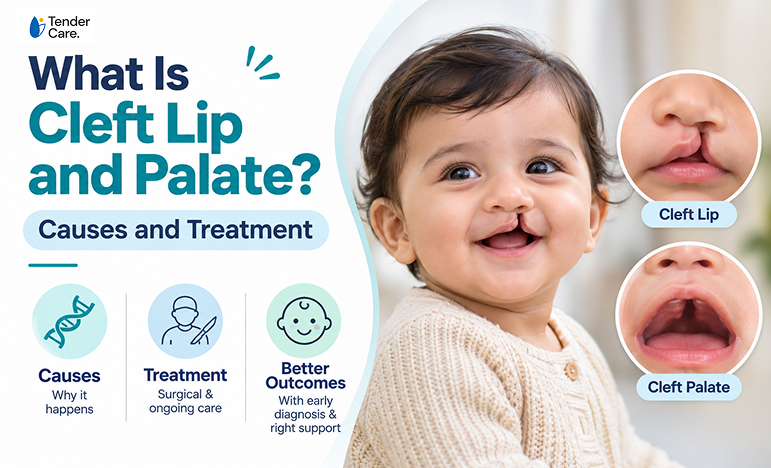
Cleft Lip and Palate are congenital conditions in which a baby is born with an opening or split in the upper lip, the roof of the mouth, or both. These conditions develop during pregnancy when the tissues forming the baby’s lip and mouth do not join completely.
A cleft lip affects the upper lip, while a cleft palate affects the roof of the mouth. Depending on their severity, these conditions can cause difficulties with feeding, speech development, hearing, and dental health.
Early diagnosis and appropriate treatment can help children manage these challenges and support healthy development. Treatment may include cleft repair surgery, feeding support, speech therapy, and dental care.
What Is Cleft Lip and Palate?
Cleft lip and cleft palate are birth defects that occur when facial tissues do not fuse properly during early pregnancy.
- Cleft Lip: An opening or split in the upper lip that may extend towards the nose.
- Cleft Palate: An opening in the roof of the mouth that may affect the front or back part of the palate.
- Cleft Lip and Palate: A combination in which the baby has openings in both the upper lip and the roof of the mouth.
These conditions may occur separately or together. Their severity can range from a small opening to a wider gap affecting the lip, gums, and palate.
What Are the Types of Cleft Lip and Palate?
The condition is classified according to the location and extent of the opening.
1. Unilateral Cleft Lip
A unilateral cleft lip affects one side of the upper lip. It may appear as a small notch or extend towards the nose.
2. Bilateral Cleft Lip
A bilateral cleft lip affects both sides of the upper lip, resulting in two openings that may extend towards the nose.
3. Complete Cleft Lip
A complete cleft lip extends through the upper lip and may involve the gum and surrounding structures.
4. Incomplete Cleft Lip
An incomplete cleft lip involves a smaller opening that does not extend through the entire upper lip.
5. Cleft Palate
A cleft palate involves an opening in the roof of the mouth. It may affect the hard palate, soft palate, or both.
6. Submucous Cleft Palate
A submucous cleft palate is a less visible condition in which the muscles beneath the palate lining do not join properly. It may be diagnosed later due to feeding difficulties, nasal-sounding speech, or repeated ear infections.
What Causes Cleft Lip and Palate?
The exact causes of cleft lip and palate are not always known. Research suggests that genetic and environmental factors may influence facial development during pregnancy.
Common risk factors include:
- Genetic Factors: Inherited genes or a family history of cleft lip and palate.
- Smoking During Pregnancy: Tobacco exposure may increase the risk.
- Alcohol Consumption: Alcohol use during pregnancy may increase the risk of birth defects.
- Nutritional Factors: Inadequate folic acid intake during early pregnancy may contribute to the risk.
- Maternal Health Conditions: Certain conditions, including pre-existing diabetes, may increase the risk.
- Certain Medications: Some anti-seizure medicines taken during pregnancy may increase the risk.
Having these risk factors does not mean a baby will develop a cleft. In many cases, the exact cause remains unknown. Cleft lip and palate are not caused by anything parents intentionally do or fail to do.
What Are the Signs and Symptoms of Cleft Lip and Palate?
The symptoms of cleft lip and palate depend on the size and location of the opening. Some conditions are visible at birth, while less visible forms of cleft palate may be diagnosed later.
Common signs include:
- Visible Opening in the Upper Lip: A small notch or wider gap extending towards the nose.
- Opening in the Roof of the Mouth: A split affecting the hard or soft palate.
- Feeding Difficulties: Problems sucking or swallowing breast milk or formula.
- Milk Coming Through the Nose: Food or liquids may pass into the nasal cavity.
- Speech Difficulties: Delayed speech development or nasal-sounding speech.
- Frequent Ear Infections: Increased risk of middle-ear infections and hearing problems.
- Dental Problems: Missing, extra, or misaligned teeth.
How Is Cleft Lip and Palate Diagnosed?
Cleft lip and palate diagnosis can take place during pregnancy or after birth. Early identification helps doctors plan treatment and provide feeding support.
1. Prenatal Ultrasound
A pregnancy ultrasound may identify cleft lip before birth. Some types of cleft palate can be difficult to detect during prenatal scans.
2. Physical Examination After Birth
Doctors examine the baby’s lips, mouth, and palate to identify the location and extent of the opening.
3. Additional Medical Evaluation
Doctors may recommend further assessments to identify associated conditions, including hearing difficulties, dental abnormalities, or genetic syndromes.
4. Hearing and Speech Assessment
Hearing tests and speech evaluations help identify developmental concerns and determine whether additional treatment is required.
What Are the Treatment Options for Cleft Lip and Palate?
Cleft lip and palate treatment focuses on repairing the opening and addressing associated feeding, speech, hearing, and dental problems.
Treatment depends on the child’s age, overall health, and severity of the condition.
1. Cleft Lip Repair Surgery
Cleft lip surgery involves closing the opening in the upper lip and restoring its structure. It is generally performed within the first 12 months of life, often around three to six months, depending on the baby’s health and surgical assessment.
2. Cleft Palate Repair Surgery
Cleft palate surgery closes the opening in the roof of the mouth and helps improve its structure and function. It is generally performed within the first 18 months, often around six to twelve months.
3. Feeding Support
Babies with cleft palate may experience difficulty breastfeeding or feeding from regular bottles. Special feeding bottles, appropriate positioning, and guidance from feeding specialists can help manage these challenges.
4. Speech Therapy
Speech therapy helps children improve pronunciation, speech clarity, and language development. Some children may require therapy even after surgical repair.
5. Dental and Orthodontic Treatment
Children with cleft lip and palate may develop missing, extra, or misaligned teeth. Regular dental examinations and orthodontic treatment can help improve tooth alignment and oral health.
6. Additional Corrective Surgery
Some children may require further procedures as they grow to improve lip appearance, nasal structure, jaw development, or speech function.
When Should Parents Consult a Doctor?
Parents should seek medical advice if a baby shows signs of cleft lip or palate or experiences feeding and developmental difficulties.
Consult a healthcare professional if your child has:
- A visible opening in the upper lip or roof of the mouth.
- Difficulty breastfeeding or swallowing.
- Milk coming out through the nose during feeding.
- Delayed speech or nasal-sounding speech.
- Repeated ear infections or suspected hearing difficulties.
- Dental abnormalities or problems with tooth alignment.
Cleft Lip and Palate Treatment at Tender Care Hospital, Bhopal
Tender Care Hospital, Bhopal, is a women and child healthcare facility providing medical care for mothers, newborns, and children. The hospital offers maternity and paediatric healthcare services to support families with their children’s healthcare needs.
If your baby has a suspected cleft lip or cleft palate, seek timely medical consultation for assessment and guidance regarding appropriate treatment or specialist referral.
Treatment may involve coordination between paediatricians, plastic surgeons, feeding specialists, speech therapists, and dental professionals, depending on the child’s individual needs.
Consult Tender Care Hospital, Bhopal, for medical guidance and appropriate care for your child.
Frequently Asked Questions (FAQs)
- What is the difference between cleft lip and cleft palate?
A cleft lip is an opening in the upper lip, whereas a cleft palate is an opening in the roof of the mouth. A baby may have either condition or both.
- What causes cleft lip and palate in babies?
Cleft lip and palate may develop due to a combination of genetic and environmental factors during pregnancy. The exact cause is often unknown.
- Can cleft lip and palate be detected during pregnancy?
Yes. A cleft lip can sometimes be detected during a prenatal ultrasound. Some forms of cleft palate may only be identified after birth.
- Is cleft lip and palate treatable?
Yes. Cleft lip and palate can be treated through surgery, along with feeding support, speech therapy, and dental care when required.
- At what age is cleft lip surgery performed?
Cleft lip repair is generally performed within the first 12 months, often around three to six months, depending on the baby’s health.
- At what age is cleft palate surgery performed?
Cleft palate repair is generally performed within the first 18 months, often between six and twelve months of age.
- Can children with cleft palate develop speech problems?
Yes. Some children may experience delayed speech or nasal-sounding speech. Speech therapy and appropriate medical treatment can help improve communication.
- Can cleft lip and palate affect feeding?
Yes. Babies with cleft palate may have difficulty creating suction during breastfeeding or bottle-feeding. Special feeding equipment and professional guidance can help